|
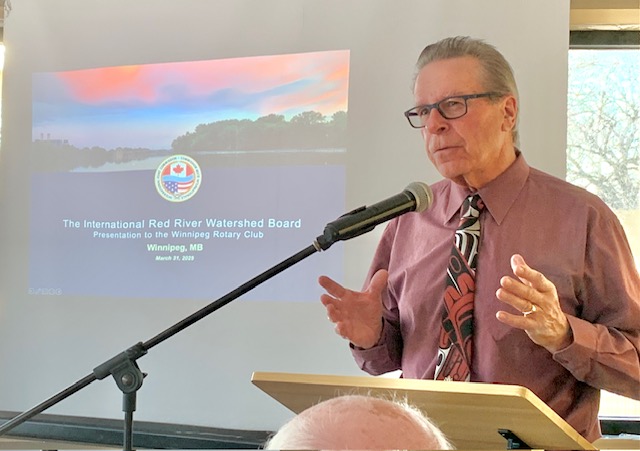 After dinner Ezekiel, welcomed Selkirk Mayor Larry Johannson. “A few weeks ago, I reached out to Larry, and everything came together smoothly. He was available on March 31st, and we happened to have an opening for a speech. From there, it all fell into place." After dinner Ezekiel, welcomed Selkirk Mayor Larry Johannson. “A few weeks ago, I reached out to Larry, and everything came together smoothly. He was available on March 31st, and we happened to have an opening for a speech. From there, it all fell into place."
Selkirk Mayor Larry Johannson was appointed in 2024 to the International Red River Watershed Board for a three-year term. As a lifelong Selkirk resident, Johannson sees this appointment as deeply meaningful, given his personal connection to the Red River and its significance for both Canada and the U.S., as well as the province of Manitoba and three U.S. states. His appointment aligns with Selkirk's strategic focus on environmental stewardship. The International Joint Commission (IJC), which appointed Johannson, plays a crucial role in managing cross-border water issues. The IJC has long been involved in addressing challenges in the Red River basin, including flooding, pollution, and habitat preservation. Established in 2021, the International Red River Watershed Board monitors water quality, quantity, and aquatic health, using an integrative and ecosystem- based approach. Ezekiel added "Since studying water resource management at Lakehead University, Canada’s water resources have been a great source of pride for me. The diversity and geography that the IJC covers are truly fascinating, spanning from the Columbia River on the west coast to the St. Croix River on the east coast, and of course, right here in Manitoba with the Souris, Red River, and Lake of the Woods. With that, please join me in welcoming Mayor Larry Johannson.” Mayor Larry Johannson on the International Red River Watershed Board A Warm Welcome and Rotary’s Impact Thank you for the terrific meal. It’s been a pleasure. The Rotary Club does fine work, and I know this firsthand through my good friend David Thorne, who is involved with the Selkirk Rotary Club. My wife, Charlotte, is here with me tonight, and it’s wonderful to be among such dedicated individuals. A Little About Me I have four kids and seven grandkids. My career began with Canada Safeway and later with Empire Foods, where I worked for 43 years. This is my fifth four-year term in municipal politics—one as a councillor and four as mayor. For ten years, I balanced municipal work with my job at Safeway, efficiently managing both responsibilities. I’ve always been passionate about giving back to my community, and I’m grateful my family remains close to Selkirk. Joining the International Red River Watershed Board I am relatively new to the International Red River Watershed Board, but I previously served on the Red River Basin Commission, representing Selkirk. The Red River Basin covers Minnesota, North Dakota, and Manitoba, with representatives like Marcus Chambers and myself advocating for Manitoba’s cities. We alternate hosting major conferences between Canada and the U.S., with this year’s event taking place at the Fairmont Hotel in Winnipeg. Cross-Border Discussions and Tariff Concerns At our last meeting in Grand Forks, tariffs were a major topic of concern. While not formally discussed during the official board meeting, informal conversations revealed that many American leaders, regardless of political affiliation, share concerns about the economic impact of these tariffs. The reality is that policies on both sides of the border affect businesses and workers in our region. Selkirk’s Role in Green Steel Production Recently, I participated in a media event with Premier Wab Kinew and Finance Minister Adrien Sala at Selkirk’s rolling mill, one of only 13 mills of its kind in North America. Our mill produces green steel, made entirely from recycled materials, and plays a vital role in sustainable construction. Selkirk steel has been used in projects worldwide, including the tallest building in Dubai and the Eiffel Tower’s reconstruction. Given the increasing global preference for green steel, Manitoba must prioritize its production to remain competitive. Lessons from the Red River Basin Commission While serving on the Red River Basin Commission, I witnessed firsthand the importance of cross-border collaboration in addressing flooding and water management challenges. When a Canadian representative was needed for the International Red River Watershed Board, my colleagues nominated me, and I was honored to accept. The board focuses on managing water resources for both the U.S. and Canada, emphasizing flood prevention and ecological sustainability. I look forward to working with the board and continuing to strengthen the relationships that benefit both our province and our neighbors across the border. Expanding the Scope of Environmental Efforts The primary focus of past discussions has been flooding issues, particularly with the completion of the Fargo Diversion, which is a phenomenal project. However, we are now expanding our efforts beyond flooding. We are also addressing pollution and the ecosystem health of our waterways. The quality of life in Manitoba is being affected, with activities like water skiing championships on the Selkirk waterfront becoming less common due to water pollution. Previously, owning waterfront property was prestigious, but today, frequent "do not swim" advisories for the lake are a major concern. The Red River is heavily polluted, and Lake Winnipeg is deteriorating. Indigenous Inclusion and Climate Awareness It is essential to include Indigenous communities in our projects and discussions. By fostering strong partnerships with Indigenous groups, we can achieve better results in environmental sustainability. Climate change is a reality that we take very seriously in the City of Selkirk. Within the next five years, we aim to have all municipal assets at net zero, entirely off the grid. Some of our buildings are already meeting this standard. Our recreational center, the third-largest in Manitoba, boasts the largest rooftop solar panel application in the province. During off-seasons, we sell hydro back to the power grid, making it a small revenue generator. In about three years, our fleet will be entirely electric or hybrid, including transit systems and municipal vehicles. Indigenous Engagement and the Brokenhead Trail Experience At my first board meeting in Brokenhead, I witnessed firsthand the value of Indigenous knowledge and collaboration. Walking the Brokenhead Trail with Indigenous guides was an eye-opening experience. They shared insights on medicinal plants and traditional remedies, highlighting the depth of Indigenous knowledge. It was a rewarding and informative experience that underscored the importance of Indigenous involvement in our environmental and sustainability initiatives. The Role of the International Joint Commission The International Joint Commission (IJC) oversees water-related issues between Canada and the United States under the Boundary Water Treaty of 1909. It serves as an impartial advisory body with equal representation from both countries. The commission ensures balanced membership and employs rigorous scientific methods for decision-making. It emphasizes public engagement and cooperation to tackle shared environmental challenges. Responsibilities of the International Red River Watershed Board The International Red River Watershed Board (IRRWB) plays a crucial role in monitoring activities affecting water flow, quality, and ecosystem health. The board ensures the implementation of flood-related recommendations and supports the integrity of aquatic ecosystems. The Red River, forming a natural boundary between Minnesota and North Dakota, ultimately drains into Lake Winnipeg. The IJC commissioners in 2024 include Dr. Pierre Baril, Dr. Susan Chiblow, and Merrell- Ann Phare in Canada and from the U.S. Gerald Acker, Robert Gioia, Lance Yohe. Challenges and Climate Change Considerations The Red River Basin is subject to extreme hydrological variations, influenced by both natural and human factors. While flooding has been a historical concern, drought conditions are becoming more alarming. During a recent visit to Grand Forks, I observed dry conditions in mid-winter, raising concerns about water shortages. The International Red River Watershed Board (IRRWB) was initially created as a pilot board in 2000 and was later upgraded in 2021 with a renewed directive to emphasize Indigenous engagement, climate change adaptation, and ecosystem health. Restoration and Conservation Efforts One of the key projects under the IRRWB is the reintroduction of sturgeon into local waterways. Sturgeon, previously introduced in the Minnesota Basin, have now migrated into Manitoba, signaling successful restoration efforts. Another significant initiative is the rehabilitation of Lebo Marsh. Wetlands act as the kidneys of Lake Winnipeg, filtering out harmful nutrients. This past winter, we partnered with Peguis First Nation to build a baffling system aimed at protecting the marsh. Early results suggest the system is holding up well, and if successful, we will expand the project. Strategic Directions for 2025 Moving forward, the IRRWB will continue to: - Monitor watershed conditions
- Provide a platform for discussion and resolution of water-related issues
- Influence governmental policies on environmental management
- Develop and implement new projects that align with strategic objectives
The board is an influential body, spanning from Washington to Ottawa. Concerns about potential budget cuts remain, but we are committed to ensuring that environmental protection remains a priority. Board Membership and Scientific Collaboration The IRRWB consists of 22 members, including representatives from the U.S. and Canada, Indigenous communities, government agencies, and academic institutions. Parity is a requirement for membership, ensuring equal representation. As a politician, I am honored to sit alongside leading scientists and experts, making each meeting an educational experience. Community Engagement and Public Meetings In 2024, we held public meetings at Grand Beach and Lake Winnipeg. Initially, some board members were concerned about public reception, but the response was overwhelmingly positive. Cottage owners, who have significant financial investments in their properties, are deeply concerned about the clarity of the lake and the health of the Red River. The public's engagement and insightful questions reinforced the shared commitment to environmental preservation. Major Infrastructure and Wastewater Treatment Initiatives One of our proudest accomplishments in Selkirk is the construction of a state-of-the-art wastewater treatment plant. This facility was built through a three-way partnership between the federal, provincial, and municipal governments, with Selkirk investing additional funds to ensure long-term efficiency. The treated water is of such high quality that it meets or exceeds federal standards for drinking water. The plant has attracted visits from environmental ministers, premiers, and experts eager to study its design and operations. Additionally, we are working with Red River College to train future water treatment operators, ensuring a skilled workforce for the future. Concerns About Economic and Environmental Stability Recent policy changes and budget cuts in the U.S. have raised concerns about the future of environmental programs and economic stability. Workforce security is a growing issue, particularly for middle-aged professionals facing job losses. As leaders, we must plan for the next generation rather than just the next election. Addressing Climate Change Skepticism While skepticism about climate change persists, the increasing frequency of extreme weather events is undeniable. Wildfires, record-breaking heat waves, and flooding have become more prevalent. Green steel from Manitoba will play a crucial role in rebuilding infrastructure in disaster-affected areas like California. Organizations like the Red River Basin Commission and the IRRWB are actively working to address climate challenges and promote sustainable solutions. Closing Remarks I appreciate the opportunity to share our efforts and achievements. Collaboration between municipalities, Indigenous communities, and environmental organizations is essential for long-term sustainability. By working together, we can ensure a healthier planet for future generations. Thank you all for your time and commitment to these vital issues. Charleswood Rotary extends their thanks to Mayor Johannson and his wife along with Brook Jones for taking time out of their busy schedule to visit our club here at Breezy Bend Golf Club. |
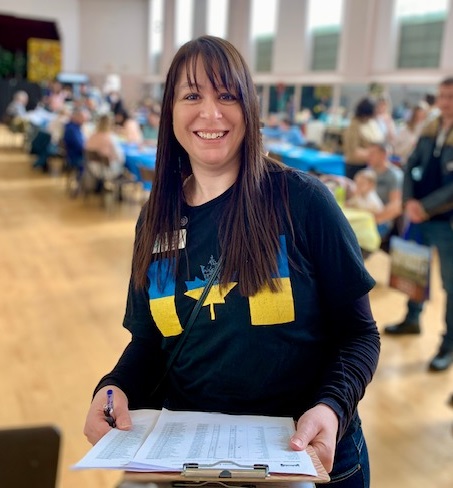 Mandy reported on the Ukrainian Bridge of Hope project: "Thank you to everyone who took part in our Ukrainian Family Social yesterday. With about 30+ volunteers on hand, we were able to put on a great event that was enjoyed by all! At estimate we had 150+ in attendance."
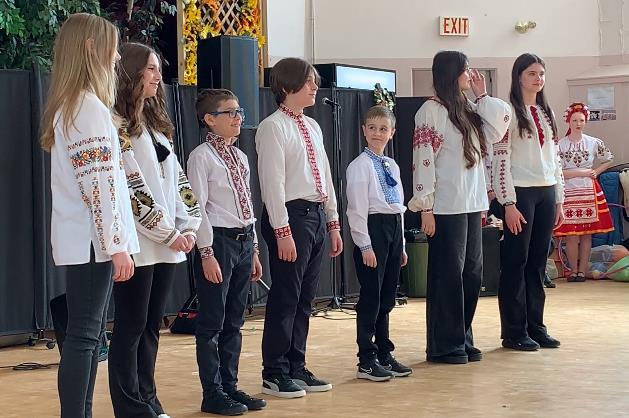 Event Recap
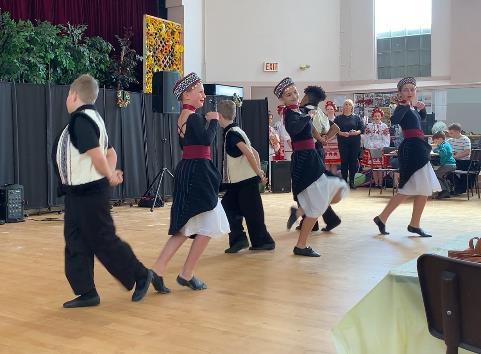 Throughout the event, Springstein Mennonite Church hosted crafts and games which were a huge hit and attraction by the children and big kids too!
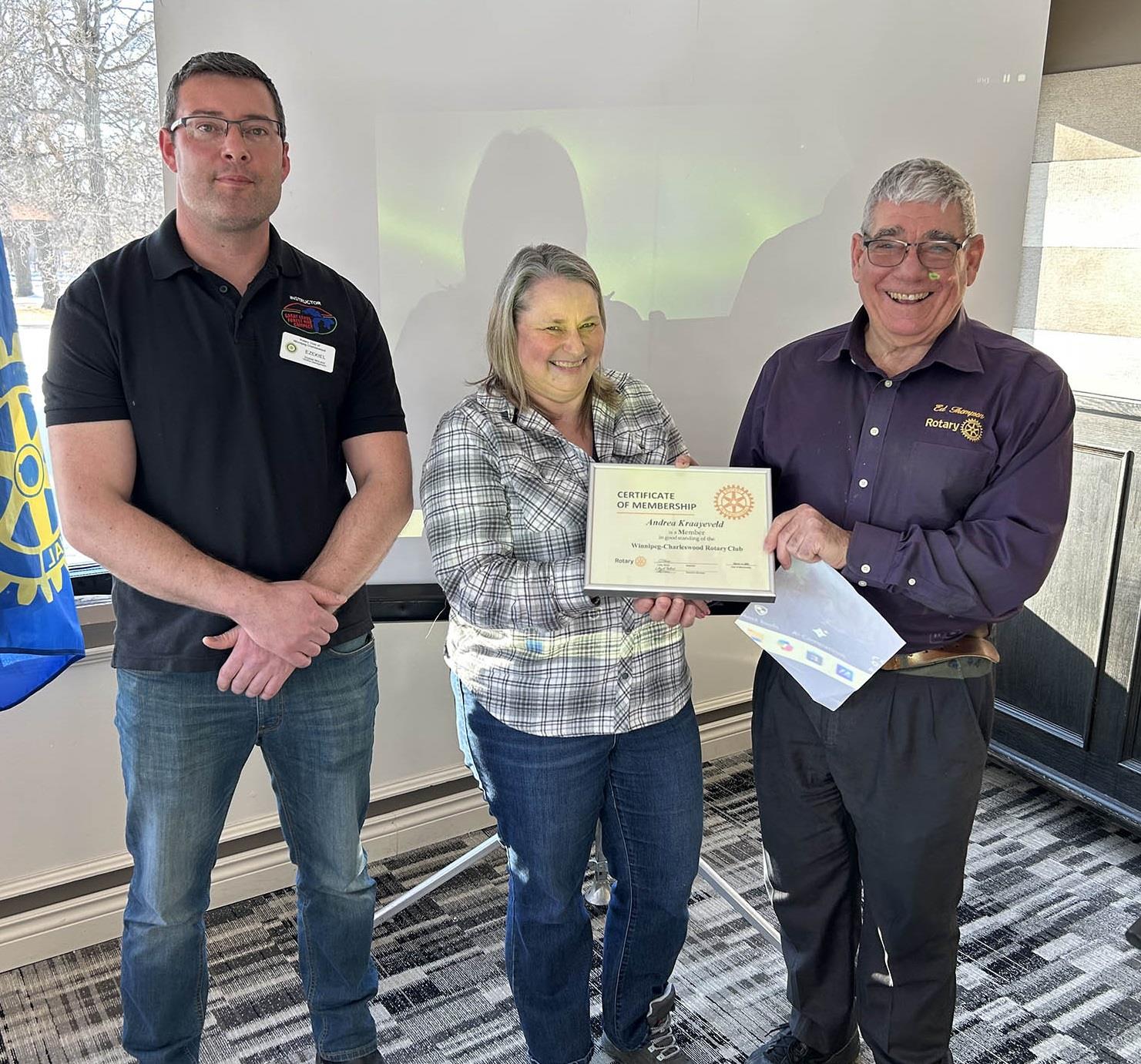 A New Member Joins Our Rotary Family. Ed Thompson proudly initiated our newest member, Andrea Kraayeveld, into the Charleswood Rotary Club. Andrea was proposed for membership by Ezekiel McLeod, and her proposal was reviewed and approved in accordance with our club’s constitution and bylaws. The Spirit of Rotary Fellow Rotarians, it is both a privilege and a pleasure to welcome Andrea into our club. Rotary is built on the foundation of service, and our principal motto, "Service Above Self" embodies our commitment to making a difference in our communities and beyond. The objective of this club, like all Rotary clubs, is to foster and encourage service through worthy enterprise.
.png)